In India’s fast-evolving construction sector, two structural systems dominate - Pre-Engineered Buildings (PEB) and Reinforced Cement Concrete (RCC) structures.
While both are widely used in industrial, commercial, and residential construction, their design approach, cost, speed of construction, and material requirements differ significantly.
If you’re an MSME contractor, builder, or project owner trying to decide between PEB and RCC for your next project, this guide will help you understand their differences, benefits, and which option can offer better cost-efficiency and faster execution.

 ....
Business
What is the Difference Between PEB and RCC?
....
Business
What is the Difference Between PEB and RCC?
What is the Difference Between PEB and RCC?
Category Business | Posted on October 21, 2025
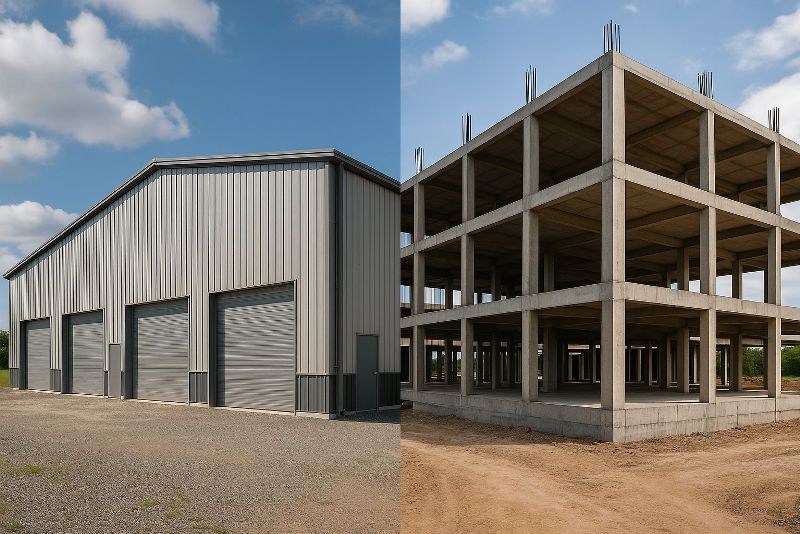
What is PEB (Pre-Engineered Building)?
A Pre-Engineered Building (PEB) is a modern construction solution where all structural components - like columns, beams, and trusses - are fabricated in a factory and assembled on-site using bolted connections.
These structures use hot rolled and cold formed steel sections such as:
• Hot Rolled Steel Beams
• Galvanized Steel Coils and Sheets
• High-Strength Bolts and Purlins
PEBs are commonly used for warehouses, industrial sheds, logistics parks, cold storage units, and commercial spaces.
Buy PEB materials online such as Hot Rolled Steel, Coated Steel, and Structural Steel at JSW One MSME - your trusted platform for quality steel procurement.
What is RCC (Reinforced Cement Concrete)?
RCC (Reinforced Cement Concrete) is the traditional method of construction that combines concrete (cement, sand, and aggregates) with steel reinforcement bars (TMT rebars) to provide structural strength.
RCC is ideal for residential buildings, bridges, foundations, and multi-story constructions where load-bearing strength and durability are essential.
Explore high-quality TMT Bars and Cement for RCC construction directly on JSW One MSME - with doorstep delivery and flexible credit options.
Key Differences Between PEB and RCC Structures
| Parameter | PEB (Pre-Engineered Building) | RCC (Reinforced Cement Concrete) |
| Material Used | Steel (Hot Rolled, Galvanized, Coated Steel) | Cement, Sand, Aggregates, TMT Bars |
| Construction Speed | 3-4 times faster due to prefabrication | Slow- requires on-site curing and formwork |
| Weight | Lightweight steel structure | Heavy concrete structure |
| Design Flexibility | High-easy to expand or modify | Limited- changes require structural redesign |
| Durability | Corrosion-resistant and long-lasting | Long life, but prone to cracks and corrosion if not maintained |
| Cost Efficiency | Lower labor and construction costs | Higher cost due to formwork, curing, and longer duration |
| Environmental Impact | Sustainable- recyclable steel, less waste | Higher carbon footprint from cement production |
| Applications | Warehouses, factories, industrial sheds | Residential, bridges, foundations, high-rises |
Advantages of PEB Over RCC
1. Faster Construction – PEBs can be completed in 1/4th the time of RCC buildings.
2. Reduced Project Costs – Prefabrication lowers labor, transportation, and installation expenses.
3. High Strength-to-Weight Ratio – Steel structures provide excellent load-bearing capacity with lighter sections.
4. Flexibility & Expansion – Future expansion or relocation is simple.
5. Eco-Friendly Construction – Steel is recyclable, reducing carbon emissions.
For industrial or commercial projects, consider using PEB materials like Galvanized Steel Coils and Hot Rolled Steel Sections available on JSW One MSME.
When to Choose RCC Over PEB
• High-Rise Buildings – RCC provides better vertical load-bearing for tall structures.
• Foundations & Basements – Ideal for load transfer to the substructure.
• Residential Projects – Better for homes and smaller buildings requiring detailed architectural finishes.
For RCC projects, shop for premium-grade Cement and TMT Rebars directly on JSW One MSME.
The Future of Construction: PEB + RCC Hybrid Approach
Many modern infrastructure and industrial projects in India are now adopting hybrid models, combining PEB superstructures with RCC foundations.
This approach maximizes both speed and strength, reducing construction time while maintaining long-term durability - a perfect solution for logistics parks, manufacturing units, and warehouses.
FAQs
Q1. Which is better - PEB or RCC?
PEBs are better for industrial and commercial projects due to faster construction and cost efficiency, while RCC suits residential and high-rise structures.
Q2. Are PEB buildings durable?
Yes, PEBs made from high-quality coated and galvanized steel can last over 50 years with minimal maintenance.
Q3. Can PEB replace RCC completely?
Not entirely. Both serve different purposes - PEBs for speed and flexibility, RCC for load-bearing and aesthetic applications.
Q4. Where can I buy PEB materials online?
You can buy hot rolled steel, galvanized sheets, and coated steel directly from JSW One MSME - with assured quality and nationwide delivery.
Final Takeaway
Both PEB and RCC have their place in modern construction.
If your goal is fast, scalable, and cost-effective industrial construction, go for PEB.
If you’re building residential or heavy-load structures, RCC remains a strong and reliable choice.
With JSW One MSME, you can easily buy steel, cement, and TMT bars online, compare grades, and get transparent pricing - all in one place.
Register Now on JSW One MSME to simplify procurement and access exclusive MSME offers.


Buy online
Mild SteelStainless SteelStructural SteelTMTCementJSW One MSME
About usBlogsSitemapJSW One TMTPolicy
Terms & conditionsPrivacy policyReturn policyBanking partner
 +91 7208055523
 support@jswonemsme.com
 Help & support